Introduction
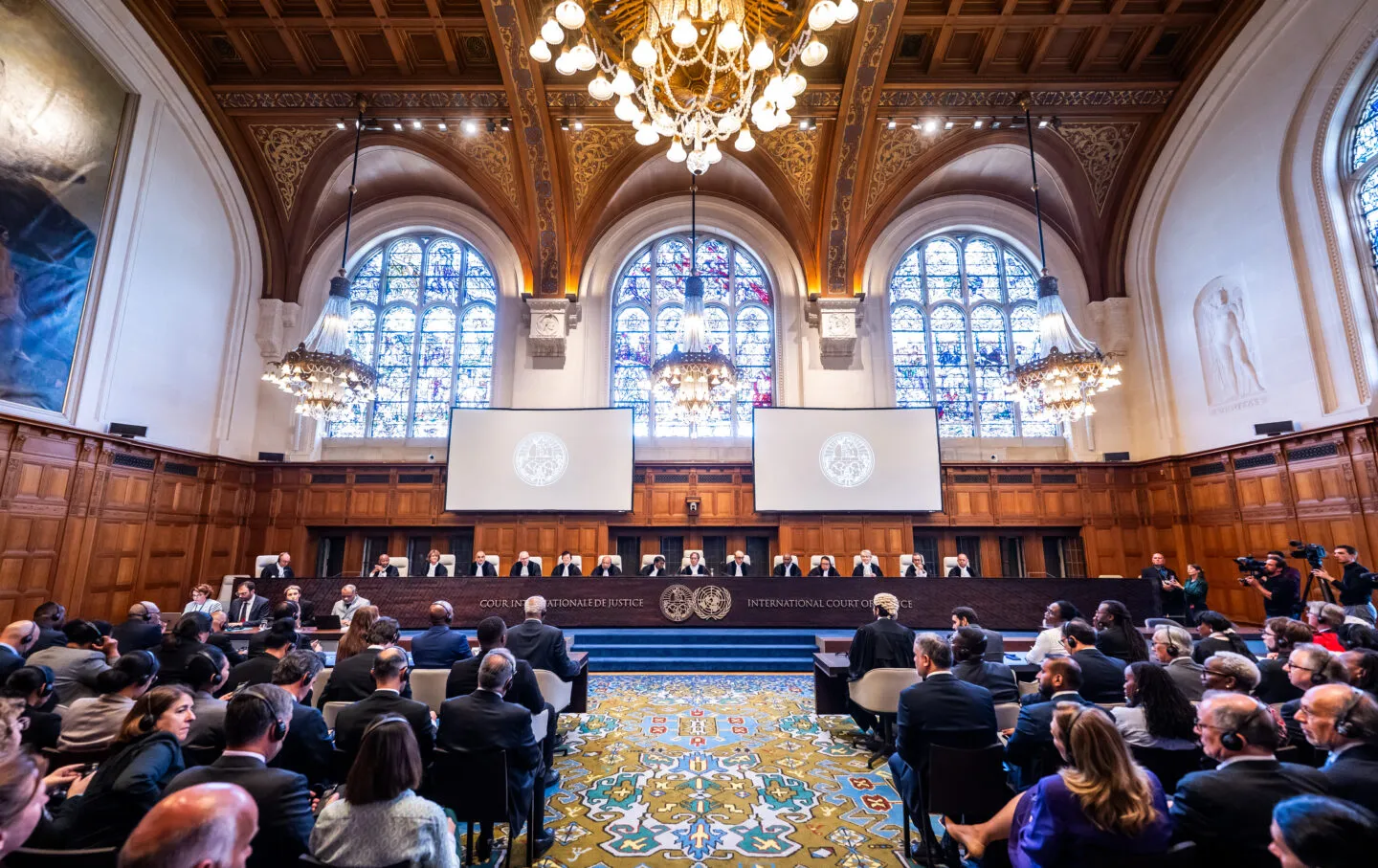
Bangladesh is a country highly vulnerable to sea-level rise, erratic monsoons, and extreme weather events. It is considered to be at the front line of the current global climate crisis. Being a core proponent of requesting the International Court of Justice Advisory Opinion on the matter, Dhaka took the world’s most existential challenge to its highest court. In July 2025, the International Court of Justice (ICJ) rendered a historic advisory opinion, which regardless of its non-binding character, carries immense legal weight and moral authority by clearly stating that States are not only legally bound to the climate system under international law, including human rights treaties and the duty of care (responsibility for transboundary harms), to protect the climate system for future generations; they are also already bound to act.
This article argues that the ICJ advisory opinion creates a stringent legal obligation and interpretive frameworks that Bangladesh must now utilise to reform and fortify its domestic climate governance regimes. By utilising these international standards in its national laws, Bangladesh will realise accountability for the climate emergency, provide justice to its most marginalised populations and cement its position as a global leader in legal innovation in response to the climate emergency.
Key Legal Lessons for Domestic Action
The ICJ advisory opinion established several authoritative legal positions applicable directly to Bangladesh’s domestic legal system.
The Mandate of Stringent Due Diligence and Precautionary Measures
The Court confirmed that all states are obliged to practice due diligence by taking all the necessary precautionary measures to prevent severe damage to the climate system (para 138). The Court distinguished this binding duty of conduct from a simple duty of result. This duty extends beyond state-led activities to the regulations of private actors subject to states’ jurisdiction.
This principle demands a radical enhancement of domestic regulatory standards. It provides legal ammunition to strengthen Environmental Impact Assessment (EIAs), requiring mandated disclosures on climate risks, and holding non-state actors liable for their activities linked to climate change. Policies must move from “soft” guidance to legally binding duties, ensuring that any local project, whether infrastructural or energy-related, is properly climate-proofed and low-carbon compliant, subject to judicial review under the ICJ’s standard of due diligence (para 298).
The Legally Relevant Benchmark of 1.5°C
The ICJ determined that the 1.5°C temperature limit, as given in the Paris Agreement, constitutes a binding obligation of all state parties (paras 224-226). This requires states, especially the large emitters, to take ambitious mitigation measures and act with the best available science. For Bangladesh, it means that the Nationally Determined Contribution (NDC) is not just a policy preference but a legal floor. The ICJ principle demands that Bangladesh align its planning documents, including the Bangladesh Delta Plan 2100, with the scientific consensus on the 1.5°C limit. This elevates climate planning to a constitutional imperative that is grounded in science and can be enforceable by courts.
Climate Action as a Human Rights Responsibility
A direct link between climate change and violations of the most basic human rights, including the right to life, the right to a clean, healthy, and sustainable environment, was established by the Court (para 386). Notably, the court’s reasoning is supported by the principle of intergenerational equity.
This offers a key tool for Bangladesh’s Supreme Court. While Article 18A of the Constitution of the People’s Republic of Bangladesh is not judicially enforceable, the ICJ’s Advisory Opinion provides an additional external aid for interpreting the existing fundamental “right to life” expansively under Article 32. Also, the focus on intergenerational equity empowers public interest litigation cases to directly challenge state inaction or harmful climate policies on human rights grounds.
Strengthening Bangladesh’s Domestic Accountability Framework
Bangladesh has shown foresight through policies like the Bangladesh Climate Change Strategy and Action Plan and the Bangladesh Climate Change Trust Fund Act 2010; however, these often remain unenforced. The ICJ’s advisory opinion provides the impetus to hard-wire accountability.
Enacting a Comprehensive Climate Change Act: Institutionalising ICJ’s Dual Due Diligence
The ICJ’s ruling on due diligence identifies a comprehensive obligation that encompasses both mitigation and cooperation. This is the perfect template for an independent Climate Change Act.
A new law must enshrine the principles of the ICJ into national law through the setting of five-year targets for the crucial sectors through national carbon budgets. A new institution should be created: that of a Dual-Mandate Climate Council. Contrary to the global precedent that is fixed on mere climate change mitigation, this body would formally embody the ICJ’s integrated due diligence responsibility for both mitigation targets and progress on adaptation efforts, including the implementation of the National Adaptation Plan (NAP), reporting to Parliament directly. Such an approach would ensure that the high standard of the ICJ is locked into national plans as well as public expenditure schemes.
Judicial Empowerment: Utilising Intergenerational Equity for Structural Mandates
The Advisory Opinion empowers local judges with an authoritative international legal interpretation. The Environment Courts of Bangladesh, established under the Environment Court Act 2010, must be formally incentivised and trained to utilise the ICJ’s reasoning.
The ICJ’s emphasis on intergenerational equity is key, as it is one of the principles that guide the interpretation of obligation (para 161). This allows for court orders that ensure the equity of generations to come by ordering the state to adopt structural solutions, such as setting a mandatory carbon budget. Finally, procedural issues such as the compounding of offenses for serious environmental crimes in Environment Courts must be addressed to ensure that punishment is a proportionate deterrent for such crimes as determined by the ICJ to be severe.
Climate-Related Reparation: Implementing the Law of State Responsibility
Climate displacement is amongst the big challenges, and yet current responses are underlined by disaster management and discretionary aid without having any clear, rights-based framework on compensation.
The ICJ explained that the Law of State Responsibility should apply to the climate harm for the duty of reparation, compensation, restitution, and satisfaction (paras 449-455). This now, at least legally, sets the basis domestically for:
Establishing a National Climate Change levy: Legally uphold the charge on profits made by domestic high-emission industries, such as thermal power and heavy manufacturing, to internalise the cost of their contribution, drawing on the “polluter pays” principle affirmed as relevant by the Court (paras 159-160).
Establishing a Legally Mandated Displacement and Reparation Fund: Ensure that a legal displacement and reparation fund is set up, like the Bangladesh Climate Change Trust Fund (BCCTF), and crucially ensure rights-based compensation for victims’ loss of land, livelihood, and home, and not just post-disaster assistance.
This not only ensures domestic justice but also strengthens Bangladesh’s international legal position vis-à-vis demanding Loss and Damage finance from historically high-emitting countries, as explicitly reaffirmed by the ICJ finding on the legal consequences of internationally wrongful acts (para 457).
Conclusion
The advisory opinion from the ICJ is a powerful vindication of climate justice efforts led by the most vulnerable nations, among them Bangladesh. It establishes, once and for all, that climate inaction can amount to an actual breach of international law with attendant legal consequences, beyond simply being a policy failure. For Bangladesh, this is the ripe moment for transition from a subject nation, primarily recipient of adaptation aid, to a global innovator in matters of climate governance.
The Bangladeshi government should translate this judgment into tangible domestic climate justice by rapidly moving to enact a comprehensive Climate Act, empowering its courts with the ICJ’s rights-based interpretations, and establishing legally mandated mechanisms for climate displacement compensation and reparation. The result of such a decision would not only shield its citizens and natural resources but also set a strong legal precedent for other vulnerable states.
The author is an LL.M. Candidate, Bangladesh University of Business and Technology and Apprentice Lawyer at the District and Session Judge Court, Dhaka.























No Comments
Leave a comment Cancel